Baldwin talks tariffs, rising costs at WSA president’s farm
Share This
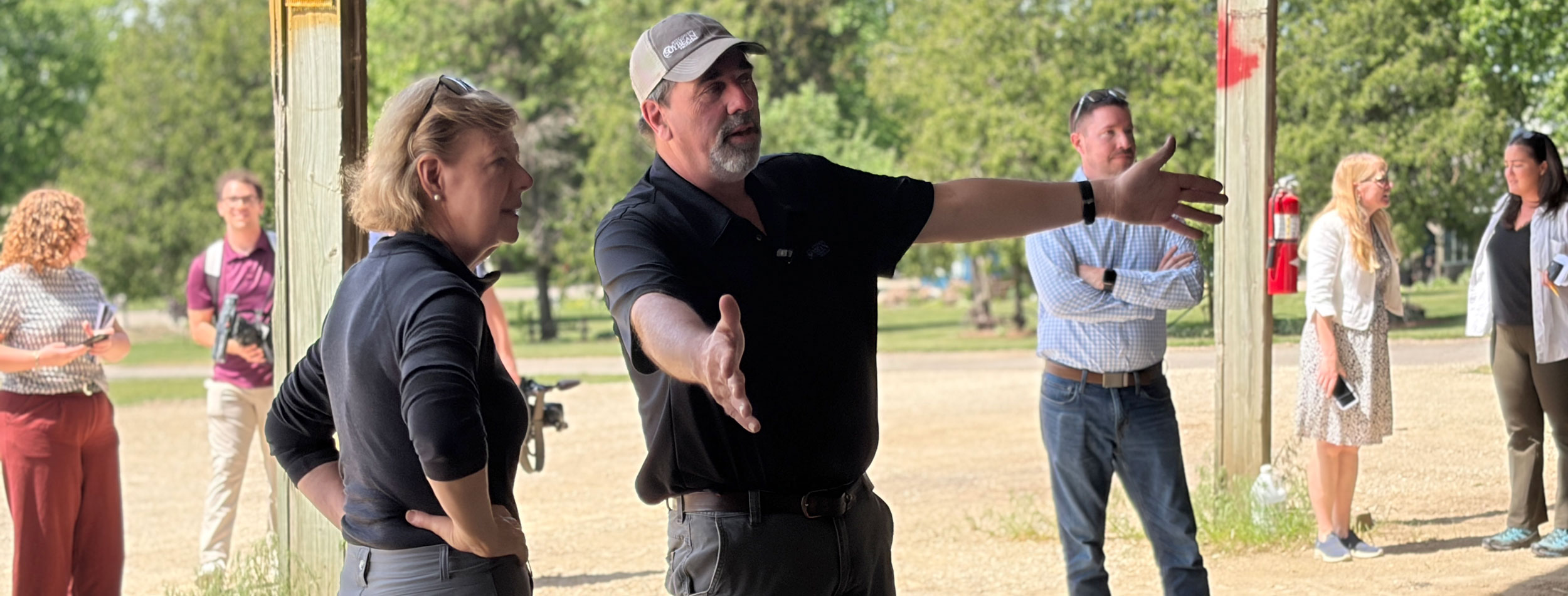
U.S. Sen. Tammy Baldwin visited a southern Wisconsin farm this week to hear directly from soybean farmers about the challenges facing agriculture, ranging from trade uncertainty and rising input costs to global instability impacting fuel and fertilizer prices.
Hosted by the Wisconsin Soybean Association (WSA) at President Doug Rebout’s farm, the visit brought together farmers and agricultural leaders for a discussion focused on the current farm economy and the importance of maintaining open communication between lawmakers and producers.
“Our farmers face a lot of headwinds,” Baldwin said during remarks to media and attendees. “There’s already enough uncertainty in agriculture without having to predict the weather and deal with Mother Nature.”
Baldwin pointed to trade disruptions, rising fertilizer costs and volatility in global markets as major concerns for farmers. She also discussed the impact tariffs and international conflicts can have on agricultural exports and input costs.
WSA leaders said conversations like the one held at Rebout’s farm are critical to helping policymakers better understand the realities farmers face every day.
“As advocates, it is important for us to have legislators like Sen. Baldwin out to our farms,” Rebout said. “The more they can understand about our operations and how policy impacts our operations, the better informed they’ll be when voting on these policies.”
WSA Vice President Matt Rehberg emphasized the organization’s commitment to working with elected officials from both political parties.
“Often times after a legislator visits one of the WSA farms, regardless of what side of the aisle they represent, it’s not uncommon to have a neighboring farmer ask why we’d host that legislator,” Rehberg said. “WSA is a non-partisan organization. We work across aisles to ensure farm-friendly policies are being adopted.”
Despite ongoing uncertainty in agriculture, both Rebout and Rehberg said farmers remain focused on adapting to changing conditions and managing risk where possible.
“Pretty resilient, pretty adaptable,” Rehberg said. “I think the talk is just always on keeping an eye on it. If you’re keeping an eye on your input costs and on the grain market, and you’re figuring out where to pull the trigger.”
Rebout echoed that sentiment, noting optimism remains a defining characteristic of agriculture.
“As farmers, we’re pretty optimistic people,” Rebout said. “Things are going to work out. We’re going to get through. We may have a few bad years here and there, but we’re going to have those good years to help us get through.”
The Wisconsin Soybean Association regularly hosts elected officials, agency leaders and policymakers on farms across the state as part of its ongoing advocacy and education efforts on behalf of Wisconsin soybean farmers.