Soybeans in the sky: WSA VP testifies on Sustainable Aviation Fuel
Share This
As farmers across Wisconsin prepare for another harvest, Matt Rehberg, Vice President of the Wisconsin Soybean Association, made time to advocate for the future of agriculture beyond the field — in the skies.
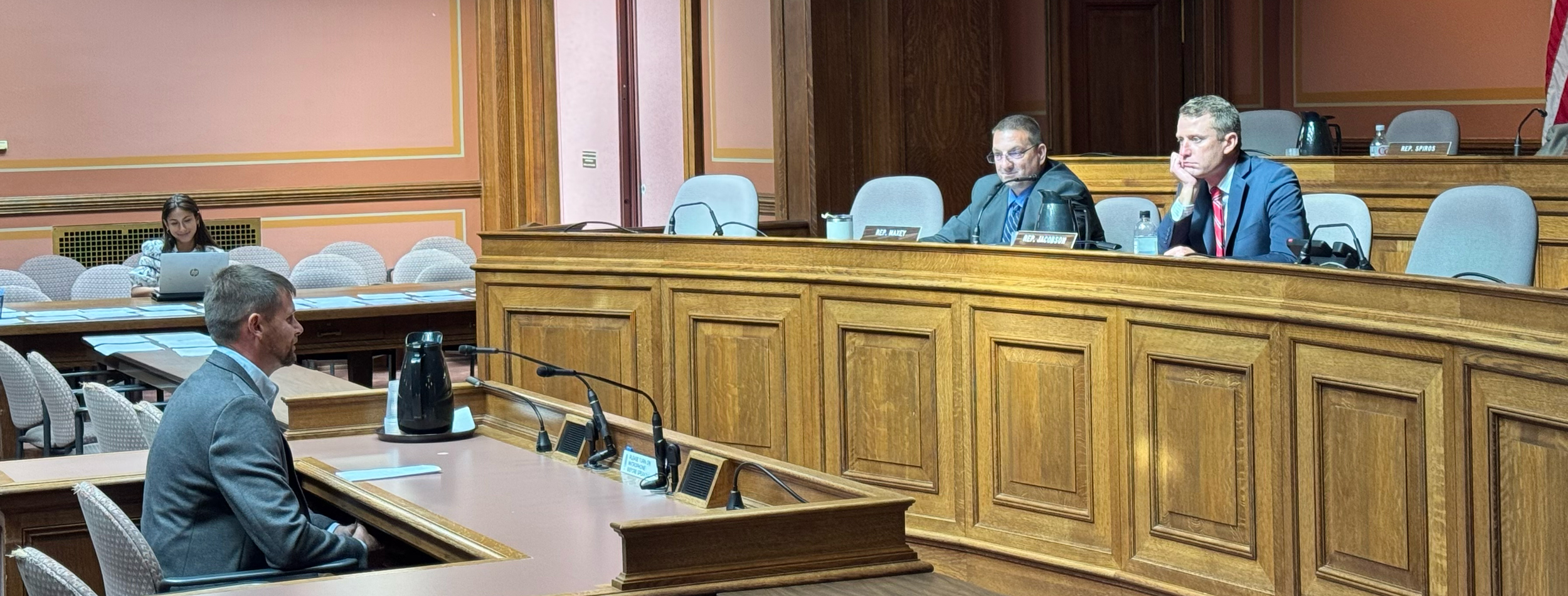
Rehberg recently testified before the Wisconsin Assembly Transportation Committee in support of Assembly Bill 222, legislation that supports the development of Sustainable Aviation Fuel (SAF) made from crops like soybeans. For Rehberg, who farms near Darien with his wife and four children, this opportunity is personal.
“Our farm may not look like a multi-generation operation on paper,” Rehberg told lawmakers, “but every night we’ve got something going on — planting soybeans, raising livestock and teaching our kids what it means to work the land.”
Rehberg emphasized the importance of creating new, stable markets for Wisconsin soybeans.
“Soybeans are already an incredibly versatile crop — we feed animals, produce food products, keep firefighters free of PFAS with soy firefighting foam, and we make biodiesel. But sustainable aviation fuel is the next frontier,” he said. “It has the potential to create a durable, premium market for soybean oil, anchoring more demand right here in Wisconsin.”
A key component of AB 222 is that the tax credit it provides applies only if the fuel is produced in-state. That provision, Rehberg said, is critical for maximizing local impact.
“If a plant is built here, we’re not just creating a new outlet for our soybeans — we’re creating jobs, local tax base and supply chain opportunities for our rural communities,” he explained. “It keeps the value of what we grow circulating in our state instead of leaving it.”
Rehberg closed his testimony with a call to action.
“What we can control is making sure Wisconsin is competitive when it comes to capturing the next generation of biofuel investment. If we don’t act, other states will, and we’ll be left behind.”