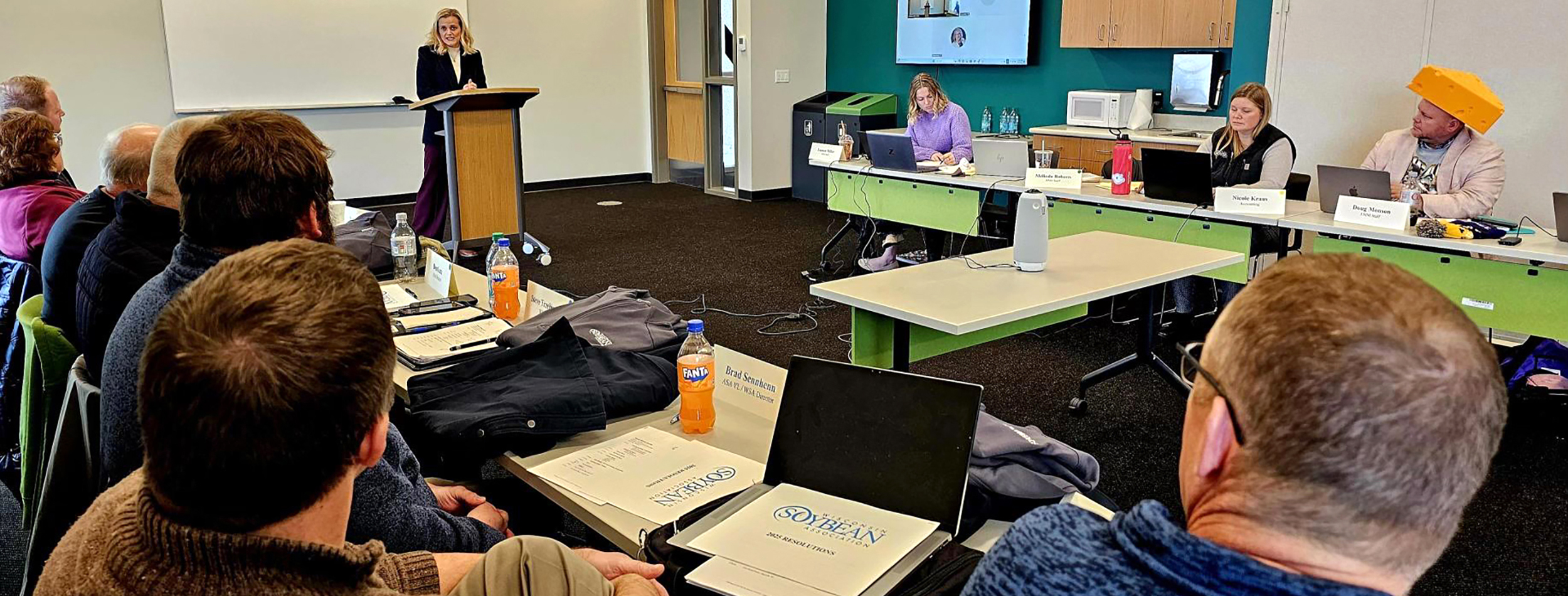
Soy Forward: WSA focused on policy wins ahead of 2026 election
Share This
By Drew Lyon
A dynamic, agile advocacy team is required to unite both political parties in Madison. The Wisconsin Soybean Association is leading from the front and rising to the challenge.
After strong advocacy from WSA, soy-based firefighting foam is earning bipartisan support among legislators and is closer to becoming more readily available in 2026 to fire departments across Wisconsin.
In early November 2025, WSA President Doug Rebout testified before the Wisconsin Senate Committee on Agriculture and Revenue in support of soy-based firefighting foams that contain zero intentionally added PFAS, aka “forever chemicals.” One of those products, SoyFoam, was developed in Wisconsin through soy checkoff investments from the Wisconsin Soybean Marketing Board over several years.
“It works on so many levels. It’s another use for our soybeans and our soymeal that’s used to make the SoyFoam,” Rebout said. “It’s good for the environment, it’s good for the bottom lines’ of Wisconsin farmers, and it’s good for our firefighters.”
SoyFoam is compatible with existing foam inductors and aerating nozzles and is comparable in cost to traditional firefighting foam. SoyFoam has a shelf life of 10 years, can be frozen, heated and thawed and will remain fully functional.
Cancer is the No. 1 cause of death among firefighters. Cross Plains Solutions’ Dave Garlie, who helped develop SoyFoam, also testified in support of the bill, describing SoyFoam’s myriad safety benefits.
“We’re in a national crisis right now because of PFAS and the risks it poses to firefighters,” said Garlie, who’s based in Wisconsin. “We’re the only ones that are really focused on utilizing agricultural feedstocks to address the problem, and soybean farmers are crucial partners in these efforts.”
Following Rebout’s testimony, the Wisconsin State Senate passed SB 474, legislation that would allow soy-based fire suppression to qualify for municipal fire protection grants through the Wisconsin Department of Natural Resources. The Assembly companion bill, AB 488, is awaiting a public hearing before the Assembly Committee on Environment.
Offering grants to Wisconsin fire departments could be a game-changer to expanding use of soy-based firefighting foam, Rebout told lawmakers.
“Fire departments need to save money everywhere they can,” Rebout said. “I’ve talked to many firefighters, and they’ve said they’d love to use SoyFoam, but you have to be fiscally responsible.”
SoyFoam is also projected to increase demand for U.S. soy by using protein from 12 million bushels of U.S. soybeans. While that might be a relatively small number – Wisconsin harvested nearly 102 million bushels of soybeans in 2024 – growing domestic demand for soy is critical to stabilizing and diversifying the farm economy, along with attracting an in-state soybean crushing facility.
“Every time we use soy as a product, it’s helping our farmers and economy,” Rebout said. “We need to keep more and more products that are using soy so we’re not so reliant on international markets.”
The Wisconsin Soybean Program’s multiyear efforts in promoting soy-based products like SoyFoam were successful in alerting state leaders.
“They were all familiar and supportive of it,” Rebout said. “The senators seemed very receptive to it.”
Up in the skies
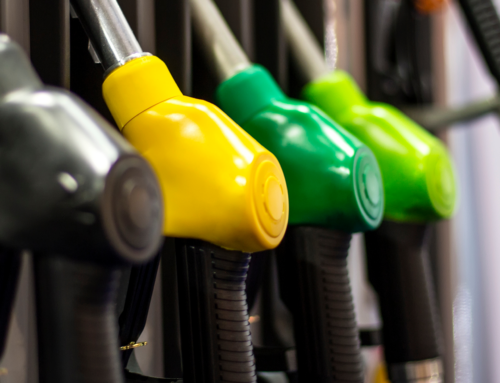
In addition to SoyFoam, WSA continues promoting several priorities in Madison, following last summer’s budget passage. In November 2025, the Assembly Committee on Transportation and the Senate Committee on Agriculture and Revenue both recommended AB 222 and SB 284, respectively, for passage by unanimous votes. The bills, which support development of sustainable aviation fuel (SAF) made from feedstocks including soybeans, now are available for consideration by the full Senate and Assembly when legislators meet again on the floor in early 2026.
The vote came in the wake of WSA Vice President Matt Rehberg testifying in support of the legislation, which would provide tax credits for SAF produced in Wisconsin. While state lawmakers have little influence in developing trade policies, there are many levers to pull to improve farmer profitability, Rehberg said.
“What we can control is making sure Wisconsin is competitive when it comes to capturing the next generation of biofuel investment,” Rehberg said. “If we don’t act, other states will, and we’ll be left behind.”
The task at hand
Lawmakers will debate and vote on legislation until March, when the session is expected to adjourn to make way for what’s expected to be a pivotal election season. In November, all 99 members of the Assembly and the 17 odd-numbered seats in Wisconsin Senate will be on the
ballot, in addition to candidates vying to replace Gov. Tony Evers. The primary isn’t until August, and a clear frontrunner has yet to emerge, though GOP Rep. Tom Tiffany, who represents Wisconsin’s Seventh Congressional District, likely commands the most name recognition in the field.
“Wisconsin having its gubernatorial election not in a presidential year does change who turns out. It affects the electorate,” WSA lobbyist Jordan Lamb said. “Right now, we’re just focused on the end of the state legislative session.”
Rebout, who hosted legislators at his farm in fall 2025, is eager to host more candidates this year to show them how family farms are enduring despite a down ag economy.
“We need to continue to tell the story of Wisconsin farmers and push for policies that help us, not hurt us, on our farms,” said Rebout, who also is entering his final year on the Wisconsin Board of Agriculture, Trade and Consumer Protection, which he currently chairs.
Grower leaders are also planning to participate Jan. 21 in the Ag Coalition’s Day at the Capitol, where they’ll visit with lawmakers and regulatory agencies. The following week, WSA will gather at the 2026 Wisconsin Corn•Soy Expo Jan. 29 for its annual meeting to hold elections and finalize policy resolutions.
“There’s lots of work ahead for us in 2026, but also a lot to look forward to,” Rebout said.
2026 Wisconsin Soybean Association Priorities
- Sustainable Aviation Fuel (SAF) tax credits
- Promoting soy-based products
- Opening new markets
- Building domestic demand
- Transportation infrastructure
- Protecting animal agriculture