‘Name of the game’: Lawmakers compromise to pass biennial budget
Share This
In Wisconsin’s divided government, which consists of a Republican-controlled Legislature and Democratic governor, compromise can be hard to achieve, even when it prevails.
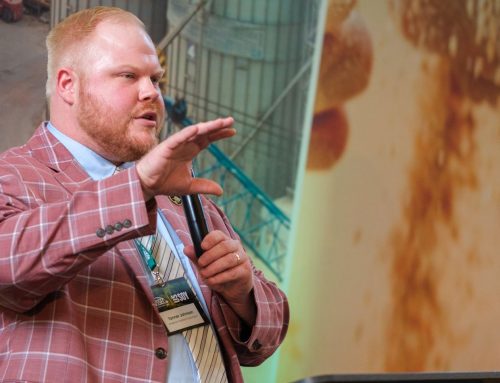
But Janesville farmer Doug Rebout, president of the Wisconsin Soybean Association (WSA), said he’s encouraged that legislators on both sides of the aisles often find common ground by uplifting one of the state’s leading economic drivers: agriculture.
“Generally speaking, they’re pretty good to agriculture in Madison,” Rebout said. “Our Ag Coalition works together and speaks in a united voice. To me, that’s a positive for our agriculture and farm-friendly policies. We’re able to work with both sides and, just like any compromise, let’s meet in the middle. That’s the name of the game.”
Just before the July 4th holiday, the Wisconsin Legislature worked with Gov. Tony Evers to pass the $111.1 billion 2025-2027 state biennial budget bill, aka the 2025 Wisconsin Act 15. The bill was passed in both chambers with bipartisan support. WSA and the Wisconsin Ag Coalition advocated for farm-related legislation this year that aims to increase demand for Wisconsin ag products, diversify market access, sponsor conservation programs and improve rural infrastructure.
“There are some good policies in here for WSA and for agriculture in general,” Rebout said. “We’re pleased to see our legislative leaders work together – that makes me happy, because it affects both parties. Everyone should be ‘in’ on agriculture and helping Wisconsin have a thriving ag industry, because it’s such a huge part of our economy.”
Here are some ag-related highlights that made their way into the budget:
Agricultural Road Improvement Program (ARIP)
This program, which was first passed part of the 2023-2025 biennial budget, provided $150 million in one-time funding through the Department of Transportation to create grants for municipalities with posted roads and bridges to provide funding to improve outdated roads and upgrade them to non-posted construction standards. The funding, with broad bipartisan support, specifically targets areas that will increase access to farmland and ag facilities.
“This is the kind of legislation that WSA continually advocates for on behalf of its members,” said WSA Director Sara Stelter, who served as WSA president when ARIP was first passed in 2023.
After ARIP funding applications far exceeded available resources, WSA advocated for extending the program and lawmakers approved an additional $150 million in ARIP funding. Of the $150 million, $30 million will be targeted to bridge and culvert repair to help improve and repair deteriorating bridges across Wisconsin. In Rebout’s native Rock County, he reported around 40 bridges are currently in disrepair and thus closed.
“In agriculture, everything starts on rural roads,” Rebout said. “The crops start here, and we have to make sure our crops get to market, so this is huge.”
Producer-led Watershed Grant Program
WSA prefers a carrot, not stick, approach. That’s why it continues to prioritize voluntary-based conservation programs.
This session, WSA and the Ag Coalition supported maintaining funding for DATCP’s Producer-led Watershed Protection Grant program. The Legislature increased funding by $500,000 to $1 million annually to enable producers and producer-led groups to implement nonpoint source pollution abatement strategies to improve Wisconsin’s soil and water quality. An additional $1.6 million ($800,000 annually) was passed to support the cover crop insurance program, which assists farmers with $5 per acre rebates of a cover crop planted for crop insurance premiums paid on those acres.
Nitrogen Optimization Grants
$2 million ($1 million annually) to continue the commercial Nitrogen Optimization Pilot Program, which helps protect vital soil and water resources.
Mental health funding
WSA has been a longtime advocate for increasing rural mental health resources at the state and national levels. The Legislature and Gov. Evers signed off on legislation that directs $200,000 toward free resources for Wisconsin farmers’ mental health via services like the Wisconsin Farm Center.
“We’re very happy to see this funding in the budget,” Rebout said. “Sure, the crops are looking great right now, but there are always different things affecting folks in farm country. When farmers are feeling stressed and overwhelmed, they can talk to someone and not feel judged about it, thanks to this funding.”
Food Purchase Grants
The budget includes $10 million ($5 million annually) for the Food Security Initiative, a program created by Gov. Evers that connects local nonprofit food assistance programs, such as food pantries, with local producers to keep shelves stocked
Dairy Processor Grants
$800,000 to increase ($1.2 million over the biennium) the available funding for the successful Dairy Processor Grant Program.
Wisconsin Initiative for Agricultural Exports
This legislation, signed in 2021 by Gov. Evers, invests up to $5 million over five years to increase exports of Wisconsin agricultural goods and allows DATCP flexibility to respond to market turbulence. While most U.S. states saw their exports drop by 1% in ag exports, Wisconsin agriculture has increased its exports by nearly 2% over the past two years; Wisconsin soybean farmers export more than 50% of their crop.
The initiative will continue funding at $1 million per year in the 2025-2027 biennium.
“Given the current uncertainties with tariffs and trade disputes with some of our most important markets, this program is more important than ever,” Rebout said. “Soybean producers are competing in a global marketplace, and we have to stay competitive.”
Rebout is doing his part to promote trade. In late July 2025, in conjunction with the U.S State Department and the International Institute of Wisconsin, he’s hosting a delegation representing 10 countries from Europe, North Africa and South America.
Unfinished business
Some WSA priorities were left out of the budget, but farmer leaders remain passionate about policies that will add demand and create new uses for soybeans in Wisconsin.
SoyFoam
The benefits of SoyFoam, a PFAS-free firefighting foam, are attracting goodwill across Wisconsin. WSA farmer leaders continue to educate the DNR to encourage accepting SoyFoam as a qualified product for local fire departments to purchase. This firefighting product doesn’t contain PFAS, aka forever chemicals.
Biofuels
Just a few weeks after WSA spoke with legislators about its budget priorities during the Ag Coalition’s Ag Day at the Capitol in April, Reps. David Steffen (R-Howard) and Sens. Romaine Quinn (R-Birchwood) and Patrick Testin (R-Stevens Point) introduced legislation that, beginning in 2028, would create an income and franchise tax credit of $1.50 per gallon of sustainable aviation fuel (SAF) produced in Wisconsin.
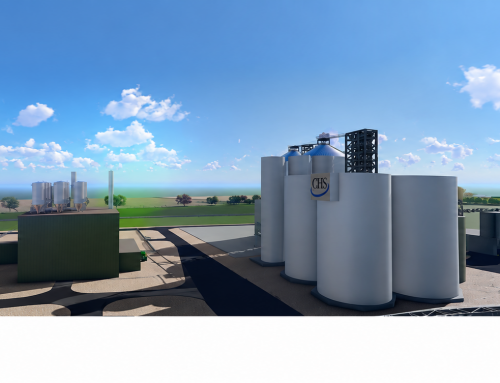
SAF is defined in the bill as aviation fuel that’s at least 90% derived from synthetic, renewable and nonpetroleum sources, including soybean oil. The credit would take advantage of Wisconsin’s robust agricultural and timber feedstocks and the state’s physical proximity to major airports in Chicago and Minneapolis-St. Paul (which has its own SAF Hub). Wisconsin is the only Midwest state without significant legislation supporting biofuels programs.
SAF contains similar properties to standard jet fuel but has a smaller carbon footprint. The fuel can also produce lower emissions while also providing a boost to Wisconsin’s growing $4.2 billion biofuels industry, which employs nearly 20,000 people.
WSA, along with the American Soybean Association, continues to support state and federal policies that can grow the SAF market and build demand for domestic feedstocks and limit imports of foreign oils. Though the SAF tax credit wasn’t included in the biennial budget, WSA continues to advocate for the tax credit as a standalone bill.
“We’re excited about the opportunities (SAF) presents to our producers and Wisconsin’s ag economy,” Rebout said. “We’re hopeful this production tax credit goes through in the future, and we can make the most of his opportunity. Let’s grow our economy here at home while improving the environment; it’s win-win.”
Looking ahead
Following the budget’s passage, lawmakers are on recess this summer. The session will resume in September to work on standalone legislation. That work will continue into March, when lawmakers will likely adjourn to begin campaigning for the 2026 campaign season. The 2026 election will include the 17 odd-numbered seats in the Wisconsin Senate and all 99 seats in the Wisconsin State Assembly. Gov. Evers has not signaled his intention to run for a third term.
WSA farmer leaders and their lobbying team will remain active in bipartisan policy conversations on behalf of the state’s over 16,000 soybean farmers. A team of WSA and American Soybean Association directors head to Washington, D.C., July 15-17 for Hill Visits with Wisconsin’s congressional delegation and a trade meeting at the Canadian Embassy.
“Our mission is to be more active legislatively and to position Wisconsin soybean farmers to be successful,” said Adam Kask, WSA executive director.
To support WSA’s advocacy, become a member by clicking here.