Wisconsin soybean farmer shares U.S. soy’s value in Japan
Share This
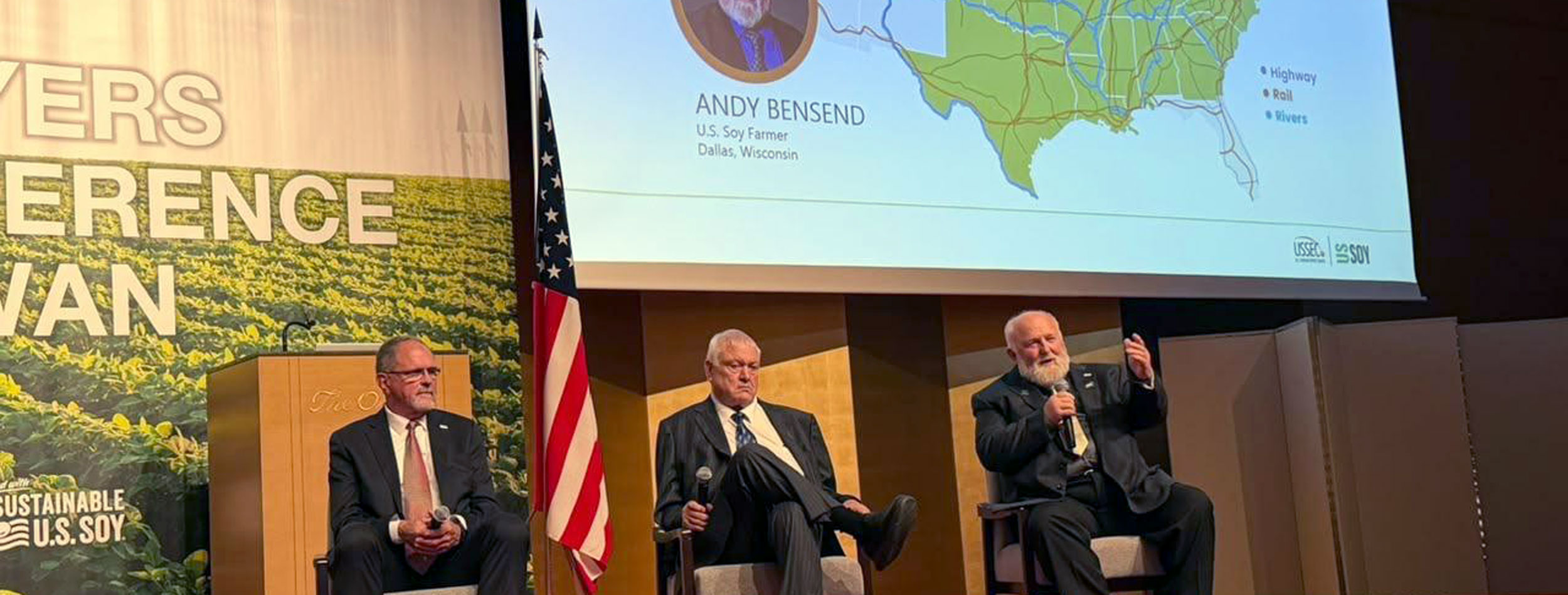
In the middle of harvest, Wisconsin soybean farmer and United Soybean Board (USB) Director Andy Bensend, who farms in Dallas, parked his combine and traveled across the globe to Japan to connect directly with international buyers and showcase the value U.S. soy brings to global markets.
“Clearly, our buyers want to hear from farmers,” Bensend said. “It’s very evident when you interact with them how appreciative those international buyers are of being able to make a connection directly with the producer.”
Bensend’s trip to Japan was part of the U.S. Soybean Export Council’s (USSEC) Asia Buyers Conference, which brought together U.S. farmers and buyers from Japan and Taiwan. Alongside farmers Keith Tapp of Kentucky and Keith Miller of Kansas, Bensend represented U.S. soybean producers and shared the story behind the reliability, quality and sustainability of U.S. soy.
Bensend specifically represented the non-genetically modified (non-GMO) soybean sector, highlighting the practices farmers use to improve sustainability on their operations and the advantages U.S. soy offers international customers.
Connecting Sustainability to Market Value
One of Bensend’s biggest takeaways was a better understanding of how international buyers view sustainability and carbon emissions.
Japanese buyers face costs associated with carbon emissions, including purchasing carbon credits. Bensend explained that U.S. soy’s sustainability performance can offer buyers an economic advantage compared with purchasing carbon credits on the open market.
“By using U.S. soy instead of our competitive products from South America, we can actually provide the carbon credits that they need through the purchase of U.S. soy for about one-tenth of the price,” Bensend said.
He estimated that the carbon-related value associated with purchasing U.S. soy could amount to just under $3 per ton, compared with approximately $30 per ton for credits purchased on the open market.
For Bensend, the conversations reinforced the importance of helping customers understand the value behind the soybeans they purchase. U.S. soybean farmers are working to produce a reliable, high-quality product while adopting practices that can reduce their environmental footprint.
The work of USSEC, supported by organizations across the U.S. soybean industry, helps build those connections. USB’s investment of farmer checkoff dollars supports efforts to demonstrate the value of U.S. soy and develop demand in international markets.
A Privilege to Represent Wisconsin Farmers
Bensend said the trip was a privilege and an opportunity to represent American soybean producers on a global stage. While these efforts often require farmers to volunteer their time, he said the experience is rewarding because it helps connect the work happening on U.S. farms with the customers who depend on their crops.
“We need them as much as they need us,” he said.